

 See My Latest Article on HelloNation

An air conditioner that leaks water is usually showing a drainage, airflow, refrigerant, or installation problem. A small amount of moisture is normal inside the system, but water should not collect around the indoor unit, drip from ceilings, or pool beneath outdoor equipment.
In Ocean View, NJ, humid summer air can produce substantial condensation during long cooling cycles. That makes some moisture expected, but visible leakage still deserves attention because it can damage ceilings, walls, flooring, insulation, and electrical components.
Where is the water coming from?
Most air conditioner leaks begin with condensation. Warm indoor air passes over the system’s cold evaporator coil, causing water vapor to turn into liquid water. That water should collect in a drain pan and flow through a condensate drain line.
A leak occurs when the water cannot move away properly or when another part of the system becomes cold enough to create abnormal ice and meltwater. The visible location of the puddle does not always identify the source. Water may travel along insulation, ductwork, framing, or the equipment cabinet before appearing somewhere else.
The first useful question is whether the water is coming from:
- The indoor air handler or furnace cabinet
- A ceiling-mounted unit or attic installation
- A condensate drain pipe
- Supply or return ductwork
- The outdoor condenser
- A frozen coil that has recently thawed
What causes an indoor air conditioner to leak?
A clogged condensate drain is one of the most common causes. Dust, algae, rust particles, and biological growth can accumulate inside the drain line, especially when the system operates frequently in humid weather. If the line becomes restricted, water backs up into the drain pan and may overflow.
A damaged or corroded drain pan can also cause leakage. Older metal pans may rust through, while plastic pans can crack from age, impact, or repeated temperature changes. A secondary pan may catch overflow, but it is not a permanent substitute for correcting the original problem.
Other common causes include:
- A loose, disconnected, or improperly sloped drain line
- A condensate pump that has stopped working
- A clogged pump reservoir or failed float switch
- An air filter that is heavily blocked
- Low refrigerant or another condition causing the coil to freeze
- Poor insulation around cold refrigerant lines
- An air handler that is not level
Attic installations deserve particular attention. A small leak above a finished ceiling can remain hidden until staining, bubbling paint, sagging drywall, or a musty odor appears. In these cases, the visible damage may extend beyond the original mechanical problem.
Can a dirty air filter cause water around the system?
Yes. A severely restricted filter reduces airflow across the evaporator coil. With less warm air moving over the coil, the coil can become unusually cold and develop ice.
When the system shuts off or the ice begins to melt, the drain pan may receive more water than it can handle. Meltwater can also spill outside the intended drainage path. A dirty filter is not the only reason a coil freezes, but it is a simple condition to check first.
Filters vary in size, thickness, and recommended replacement interval. Homes with pets, renovation dust, indoor smoking, or frequent door and window use may load filters faster than expected. The filter should be replaced or cleaned according to its design, without installing a filter that is more restrictive than the equipment can handle.
Why does the coil freeze?
A frozen evaporator coil often points to inadequate airflow or insufficient refrigerant. Airflow problems may result from a dirty filter, blocked return grille, closed supply registers, crushed flexible ductwork, or a blower problem.
Low refrigerant is different. Refrigerant is not normally “used up” like fuel. If the charge is low, there may be a leak, an incorrect previous charge, or another sealed-system problem. Adding refrigerant without finding the underlying cause can provide only temporary relief and may not be permitted under applicable environmental requirements.
Signs of a frozen coil can include:
- Ice on the copper refrigerant line or indoor coil
- Weak airflow from several supply registers
- A system that runs continuously but does not cool well
- Water appearing after the system is turned off
- Unusual hissing or bubbling sounds
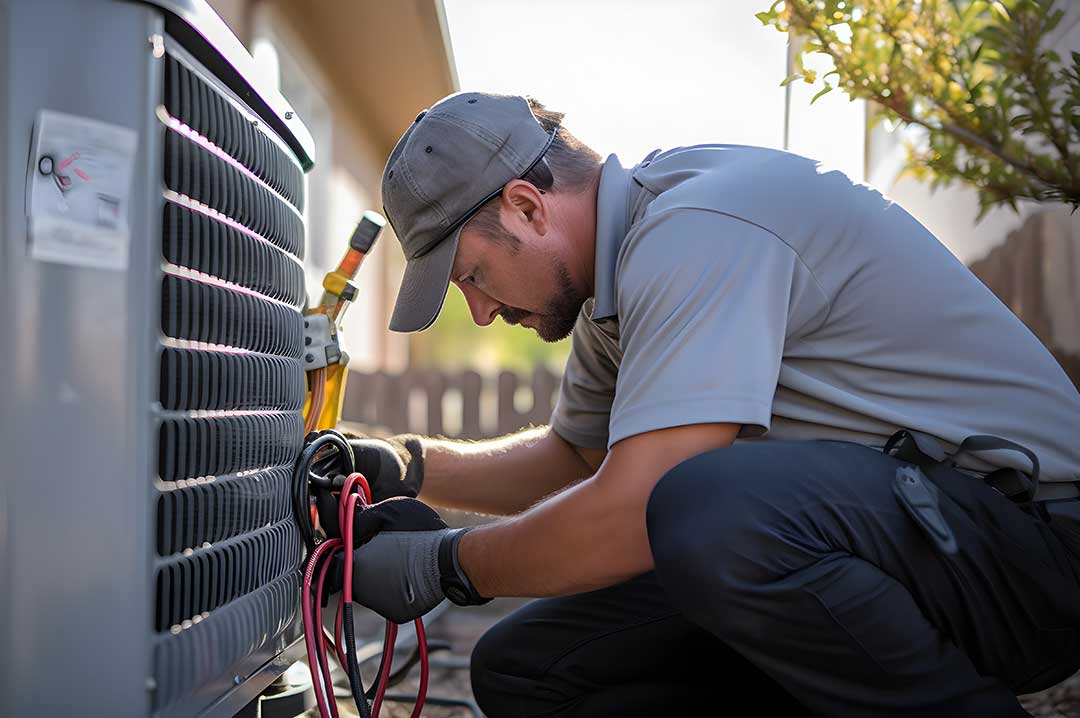
If ice is visible, continuing to run the air conditioner can strain the compressor and increase water damage. Turning off cooling while allowing the indoor blower to run, if the controls permit it, may help the coil thaw. Water from thawing ice should be monitored carefully.
Why is the outdoor unit producing water?
The outdoor condenser normally does not create a large puddle during standard summer cooling. Most condensation forms at the indoor evaporator coil, where warm indoor air meets a cold surface.
Water around the outdoor unit may come from a refrigerant line, a nearby gutter or downspout, irrigation, rain, or a plumbing source. In some systems, the outdoor unit may release water during special operating conditions, but persistent pooling should not automatically be considered normal.
The base beneath the condenser should remain stable and allow suitable drainage. Standing water can contribute to soil erosion, plant growth, corrosion, and shifting of the equipment pad. It can also hide the actual source of the moisture.
Could humidity in Ocean View cause an air conditioner to leak?
Humid conditions increase the amount of water an air conditioner must remove from indoor air, but humidity alone does not make a properly functioning system leak. It simply increases the volume of condensate moving through the drain system.
Homes near coastal environments may also experience salt-laden air, wind-driven moisture, and seasonal pollen. These conditions can contribute to corrosion, debris accumulation, and more frequent filter loading. Outdoor drainage, crawl spaces, attics, and duct insulation should be considered when investigating recurring moisture.
Condensation can also form on poorly insulated ducts or refrigerant lines. If humid air contacts a cold, uninsulated surface, water may drip even when the primary drain is working correctly.
What should be checked first?
Before investigating further, switch off cooling if water is near electrical components, ceiling fixtures, or outlets. Protect flooring and furnishings, but avoid opening sealed refrigeration components or disturbing electrical wiring.
Useful observations include:
- Whether the system is actively cooling
- Whether the indoor coil or refrigerant line has ice
- Whether the air filter is dirty
- Whether water is present in the drain pan
- Whether the condensate line is dripping at its normal discharge point
- Whether the leak appears only during long, humid cycles
- Whether ceiling or wall damage is spreading
A drain blockage, failed condensate pump, damaged pan, frozen coil, or refrigerant issue may require a qualified technician, particularly when electrical parts, refrigerant, attic access, or structural damage is involved. Water near wiring should be treated as a safety concern rather than a routine maintenance issue.
How can recurring leaks be reduced?
Regular filter care and clear airflow paths reduce the risk of coil icing. Keep supply and return grilles unobstructed, and avoid covering vents with furniture or household items.
The condensate drain and pan should be inspected as part of routine air-conditioning maintenance, especially before the cooling season. Drain lines should be treated only with methods compatible with the equipment and local safety requirements; harsh chemicals can damage components or create hazards.
Persistent leaks should not be managed by repeatedly drying the floor or adding water to a pan. The underlying cause may be worsening, and hidden moisture can encourage mold growth or damage building materials before the problem becomes obvious.